Latest articles
All 129 articles
Models and software
AI
Language models trained from scratch, more than two dozen others fine-tuned, and tools for working with AI agents.
- Argonne base models
- 8
- models on Hugging Face
- 48
HPC tools
Open-source tools for shared Slurm clusters, from finding a free node to finding out why a job failed.
- tools
- 8
- downloads in the last 30 days
- 733




R packages
Seven packages on CRAN: extensions to ggplot2, tidy tools for text, and data connectors.
- packages on CRAN
- 7
- downloads from the Posit mirror
- 48,980
Figures as of October 26, 2026, from Hugging Face, PyPI Stats and the Posit CRAN mirror.
Activity and downloads
A year of releases and articles
Each square is a day, shaded by how much was published on it: 95 of the last 365 days saw something new.
- 21 articles
- 90 PyPI releases
- 18 CRAN releases
- 36 models
- 9 datasets
Downloads from Hugging Face
To date, by kind, across 48 models and 47 datasets: 57,565 in all.
5 smaller kinds, 2,723 downloads between them.
Downloads of the HPC tools
From PyPI, mirrors excluded, added up over the 13 weeks to October 25: 7,655 in all.
- rapidu 2,262
- slurmwatch 1,497
- slurmpast 1,476
- nodetop 1,082
- slurmate 943
- dirscape and hpcpilot 395
Downloads of the R packages
Per month from the Posit CRAN mirror, November 2024 to September 2026, by package.
- ggDoubleHeat 9,667
- ggchangepoint 6,230
- tidyEmoji 5,216
- 4 others 2,708
As of October 26, 2026. Releases from PyPI and CRAN; models and datasets dated by the creation of their Hugging Face repositories; downloads from Hugging Face, PyPI Stats without mirrors, and the Posit CRAN mirror.
Browse by topic
Language models
Pretraining small models from scratch, teaching one to reason, and the hardware and arithmetic underneath.
11 posts
-
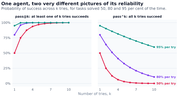 Evaluating AI Agents When Every Run Differs: Repeated Trials, Paired Comparisons and Graders
-
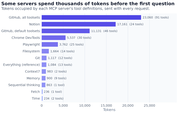 Tool Calling in Language Model Agents: Designing the Interface Between a Model and Its Tools
-
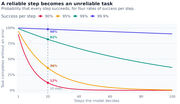 Workflow or Agent: Deciding Which Steps Belong in Code and Which Belong to the Model
-
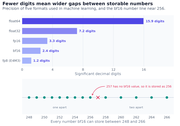 Why Temperature Zero Is Not Reproducible: Floating-Point Arithmetic and Batching in Language Model Inference
-
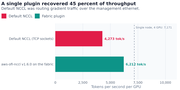 Tuning the GPU Interconnect in Multi-Node Language Model Pretraining
-
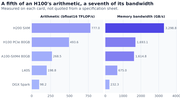 A Desktop Grace Blackwell Machine as Research Infrastructure: Serving and Training Benchmarks for the NVIDIA DGX Spark
-
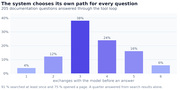 Evaluating an Agentic System: Three Axes, and What Auditing the Measurements Changed
-
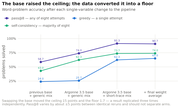 Argonne 3.5-think: From Base Model to Reasoning Model
-
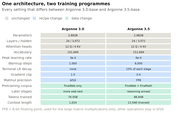 Argonne 3.5-base: Retraining an Unchanged Architecture With a Revised Recipe
-
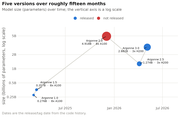 Pretraining a Language Model From Scratch: Argonne 1.0 to 3.0
-
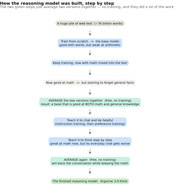 How I Taught a Small Language Model to Reason
HPC tools
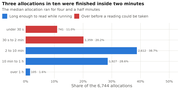
Open-source command-line tools for shared clusters: watching a job while it runs, reviewing it after it ends, and measuring disk use.
4 posts
Data studies
What 51.9 million job postings and 12.8 million rental listings can and cannot show, and six degrees of separation at world scale.
6 posts
-
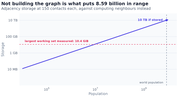 Six Degrees of Separation at World Scale: Exact Shortest Paths in Acquaintance Networks of 8.59 Billion People
-
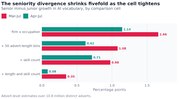 Robustness Auditing of Observational Findings: Evidence from 51.9 Million Job Postings
-
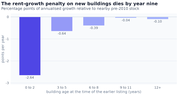 Separating the Operator From the Market: Repricing Behaviour in 12.8 Million Rental Listings
-
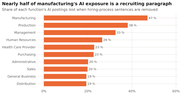 Counting Artificial Intelligence in 51.9 Million Job Postings: Measurement, Rotation, and Firm Adoption
-
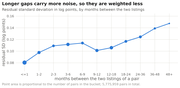 A Repeat-Rent Index From Rental Listings: External Validation and a Falsified Explanation for Its Level Bias
-
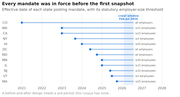 Pay-Transparency Mandates in 51.9 Million Job Postings: Measurement, Within-Firm Evidence, and Spillover
R analyses, 2021–2022
Shorter analyses in R from 2021 and 2022, most of them on TidyTuesday datasets.
108 posts